Exepad
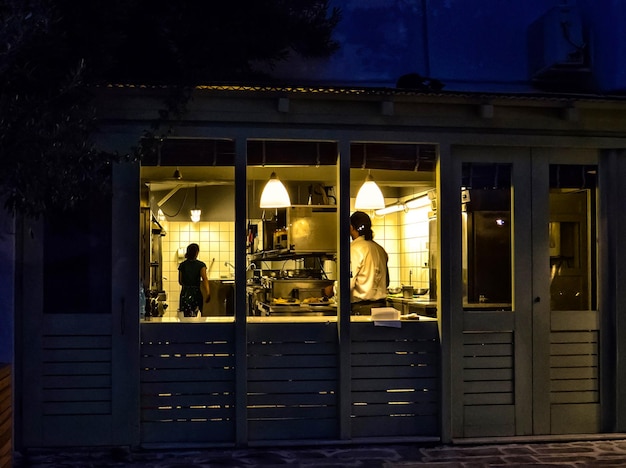
A lit storefront window at dusk, evoking the shift from static signage to living digital shopfronts

The Quiet Shift From Static Websites to Living Applications

Exepad Team · · 9 min read

For most of the last twenty years, the answer to the question does a small business need a website? has been an unambiguous yes. The answer to what does the website need to do? has been much less ambiguous than people realise. The honest answer, for most small businesses, has been almost nothing. Hours. Address. A picture of the team. A contact form that probably emails the owner. Maybe a gallery of recent work. Maybe a single call-to-action button. A digital business card with three pages.

A website of this shape is still useful. It is the minimum viable online presence. Customers looking for an address find it. People checking for opening hours find them. A prospective client who wants to verify that the business exists gets their verification. That is a genuine function and it is not to be dismissed.

What has shifted quietly over the last five years is what the most successful small businesses have done with their websites on top of that baseline. A florist that takes orders online. A trainer that books one-on-one sessions through their site. A clinic whose patients log in and see their records. A tradesperson whose clients upload photos of the issue before the call. A consultant whose clients have a portal where every deliverable from the engagement lives. These businesses all still have the hours, the address, and the team photo. The website also does things. And somewhere along the way, without anyone in the business explicitly saying so, the website became an application.

The digital business card versus the working website

The gap between these two kinds of websites is wider than it looks from the outside. A digital business card is a thing a visitor reads. A working website is a thing a customer uses. The verb changes and so does nearly everything about how the site needs to be built, kept up, and budgeted for.

A digital business card has visitors. They arrive, spend sixty seconds, and leave. Success is whether they remembered the phone number. The website is a poster that happens to be on the internet.

A working website has users. They come back. They log in. They expect their previous actions to be remembered. They expect the site to respond when they do something. Success is whether the user got their thing done. The website is a tool that happens to be on the internet.

Both are legitimate. But the two are not interchangeable. A digital business card that tries to behave like an application usually fails — the hosting does not support it, the content management tool cannot hold the right kind of data, the cost of maintaining it grows faster than the benefit. A working website that tries to behave like a digital business card usually under-delivers — customers who expected to do something feel the site is thinner than it should be.

The question worth asking, honestly, is which one your business needs. For many businesses, the digital business card is genuinely the right answer. For others, the quiet answer has become we need the site to do things, and have needed it for a while, and we have been papering over the gap with spreadsheets and email.

Four signs a website has crossed the line

Four markers distinguish the working website from the digital business card. A site that matches one is still a brochure with a feature on it. A site that matches two has started the transition. A site that matches three or four is already a living application, whether the team running it calls it that or not.

It has users, not visitors

The first sign is that the site has people who come back on purpose. Customers with logins. Members with accounts. Clients with portals. Learners with progress. The site recognises them. Their previous actions persist. The front page is different for them than it is for an anonymous visitor.

For a digital business card, everyone is an anonymous visitor. For a working website, a meaningful fraction of traffic is logged-in users, and the experience is shaped around them.

It stores data

The second sign is that the site is responsible for holding information on behalf of customers. Bookings. Submissions. Orders. Feedback. Records. Transactions.

A digital business card holds no data beyond its own content. A contact-form submission gets emailed out and the site is done with it. A working website is the system of record for something — it is where the booking lives, where the client's document is stored, where the member's progress is tracked. The data lives on the site by design, not by accident.

Illustration of a website layout evolving into a more interactive application

It responds to actions

The third sign is that the site does things in response to user behaviour. Confirmation emails go out. Reminders fire the morning of the appointment. A new submission triggers a notification to the team. A completed course generates a certificate. A cart that has been abandoned for a week produces a gentle nudge.

A digital business card does not respond. It is static. A working website is full of small automated behaviours, most of which nobody in the business would have listed if asked, because they have quietly become part of how the business runs.

It grows

The fourth sign is the hardest to see from a single snapshot. A working website grows. It has new features added over time as the business learns what customers need. The booking module grew out of too many phone calls. The client portal grew out of too many email attachments. The loyalty tracker grew out of a spreadsheet the manager had been keeping on the side.

A digital business card does not grow in this way. It gets a redesign every three or four years, but between redesigns it is essentially the same site. A working website is a piece of software that the business is improving, more or less continuously, the same way the business improves its services.

The small-business cases where the line matters

None of this is an argument that every small business needs a living application. A flower shop that sells bouquets from a storefront and does not take online orders probably does not need a CRM. A solo accountant with fifteen long-term clients probably does not need a client portal. A coffee shop probably does not need a loyalty engine. The digital business card will serve them well, and has for years.

The cases where the line matters are the ones where the business is already papering over the gap. A consultancy that is emailing deliverables and version-controlling filenames by hand has crossed the line — they just have not named it. A trainer that is taking bookings over DM and sending payment links manually has crossed the line. A clinic with a waiting-list spreadsheet and a receptionist who calls people when slots open has crossed the line. The question for these businesses is not whether to cross the line. They crossed it a year ago. The question is whether the website is going to acknowledge it.

A useful thought experiment: if a new hire joined the business tomorrow, how much of their daily work would involve something the website could not help with, that is nonetheless a core part of what the business does? If the answer is a lot — bookings, records, reminders, follow-ups, member management — the website is not doing its share of the work, and the operational burden is being carried by people and spreadsheets. That is a signal.

What the shift actually requires

The business owners we talk to often assume the shift from website to application is a bigger project than it is. The assumption is shaped by the last decade — when turning a website into an application genuinely did mean hiring a developer, standing up a new system, and maintaining it alongside the existing site. That assumption has outlasted its own reason.

The shift, today, requires three things. A place where the data can live — not a shared drive, but a proper database that belongs to the business. A way to express what the site should do in response to actions — bookings confirmed, reminders sent, submissions routed — without writing that logic from scratch. And a way to add to the site over time without a redesign project every time a new capability is wanted.

None of these are exotic. Every single one is available to small businesses now. The shift has quietly stopped being about technical capability and started being about the decision to invest a small amount of operational attention in it — usually less than a month of an ops lead's time — and stop patching the gap with spreadsheets.

Our perspective

At Exepad we built the platform for this specific shift. For businesses that started with a website and have grown to need the website to do things. For teams that have been assembling application-like behaviour on top of a brochure site, using spreadsheets, email, and a handful of subscriptions, and are ready to publish the whole thing as a single application that grows with the business. We are not an answer for the business whose digital business card is genuinely sufficient; we are an answer for the business that has already crossed the line and is looking for a cleaner way to acknowledge it.

If you want to see the shape of the platform, the homepage is the best place to start. The essay on what "publishing" should actually mean in 2026 is the closest companion piece to this one, and the piece on the hidden cost of managing many disconnected subscriptions is the adjacent essay on why stitching more subscriptions together tends not to solve the underlying problem.

More from Industry Insights